A Practical Plan for Wedding Ceremony Blooms
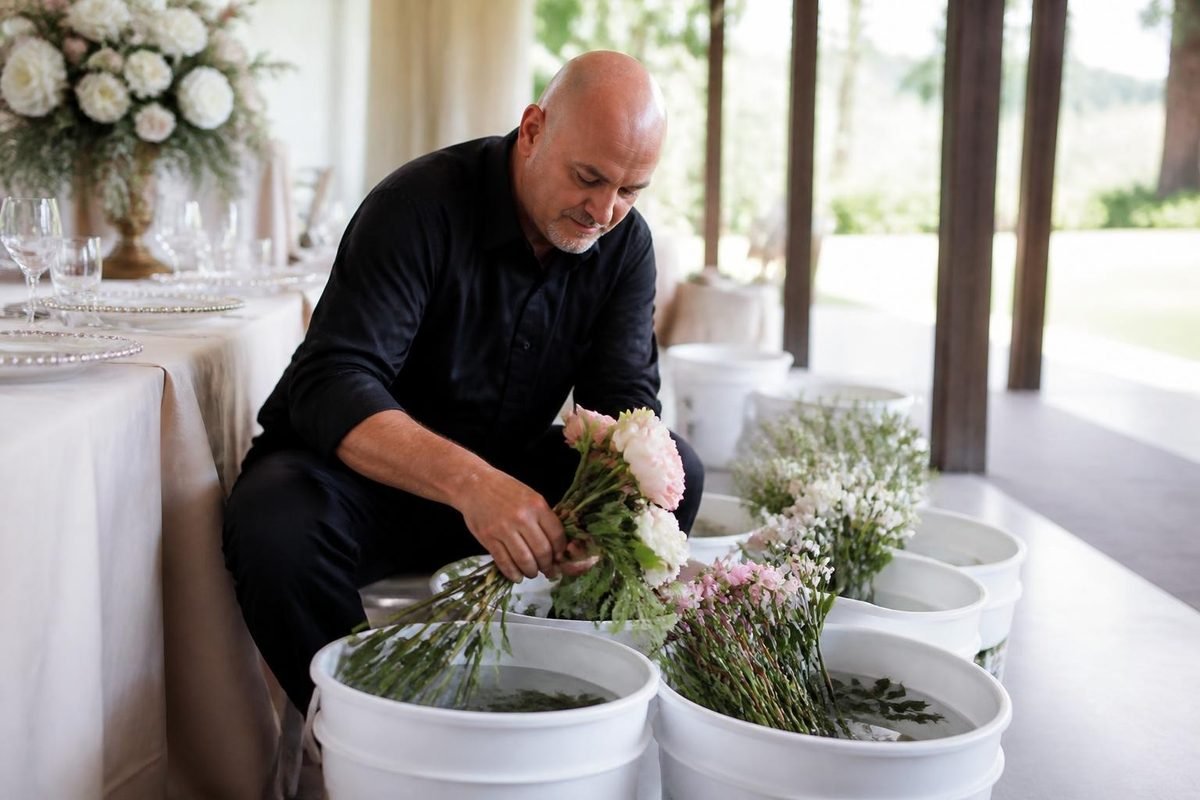
After the ceremony, flowers can be moved to the reception, shared with guests or local groups, saved as keepsakes, or composted if their materials are suitable. Choose a plan based on the flowers’ condition, your agreements with the florist, and the time available after the ceremony.
Make a flower plan early
Decide what will happen to each arrangement while you are organizing the ceremony. Large pieces may take several people to lift, and some flowers may be fixed to an arch or stand owned by the florist or venue.
Before the wedding, ask the florist and venue which arrangements can be moved, who is allowed to move them, and when they need to be collected. Flowers can wilt if they sit without water or in a hot place, so timing and transport matter.
- Write down which arrangements you plan to keep, relocate, give away, or compost.
- Confirm which vases, stands, and other structures need to go back, and which flowers you may take.
- Choose someone to manage each move and confirm the schedule with the venue.
- Prepare buckets, water, and a suitable collection area if they will be needed.
- Share the instructions with everyone helping before the wedding day.
Use the arrangements at the reception
Ceremony flowers near the entrance can be placed where reception guests arrive. Smaller arrangements could decorate a bar, gift table, or spot beside the seating chart. Reusing them gives the flowers another role and may mean you do not need a separate set for those areas.
Pick their new locations ahead of time and make sure each piece will fit. Keep walkways open, and avoid surfaces that could be harmed by water or falling petals. If an arrangement is attached to a structure, check with the florist before trying to take it down.
Let other people enjoy them
Guests, relatives, or members of the wedding party may want to bring flowers home. If the original vases have to be returned, set out clean containers instead. Tell people when they can collect the flowers so they know what to expect.
A care home, community group, or another nearby organization may also accept a donation. Get in touch before the wedding rather than arriving with flowers without notice. Ask about any limits on delivery, strongly scented flowers, or the condition arrangements need to be in.
Keep a few flowers as a memento
Select the stems that mean the most to you and arrange for preservation soon after the ceremony. Pressing or drying flowers can alter their color and shape. Ask a preservation specialist what the finished flowers are likely to look like before you decide.
Photographs are another straightforward way to remember the arrangements. Take pictures before anyone dismantles them, including close views of the flowers and wider shots showing how they looked in the ceremony space.
Compost what is suitable
Some plant material can go into compost, but first take off ribbons, wire, tape, and any other materials that are not plant matter. Local composting rules differ, so check which materials are accepted. Do not put floral foam in a compost pile.
Whatever you decide, make sure someone knows what to do with both the flowers and their containers. A clear plan helps the arrangements find another use and keeps their handling from becoming your responsibility at the end of the celebration.
Have a look at see more